

The rise of digital communication has made financial transactions easier and faster, but it has also given scammers new avenues to exploit unsuspecting individuals. One such method is through eChecks, or email checks. If you’ve ever received an email claiming to include a digital check, you might wonder, “Is this legitimate or a scam?” Let’s dive into how eCheck scams work, the risks involved, and how to protect yourself, possibly through printing checks at home.
1. How Does an e-Check Scam Work?
An eCheck scam typically involves a fraudulent check sent as an attachment or link in an email. Scammers often pose as legitimate businesses, charities, or even someone you know to lure you into depositing the check. Here’s how they operate:
- Fake Identity: Scammers may impersonate well-known organizations or create convincing fake identities.
- Urgency and Pressure: They often use urgent language to pressure recipients into acting quickly, such as claiming a refund or payment needs immediate attention.
- Fraudulent Check Details: The check might look authentic, complete with watermarks and bank logos. However, these details are often fabricated.
Once you deposit the check, the scam unfolds. Initially, your bank might make the funds available, but when the check eventually bounces, you’re left responsible for the withdrawn amount. This can lead to financial loss and potential legal complications.
2. Why Are eCheck Systems Risky?
There are several risks associated with eChecks, especially when they come from unknown or unverified sources:
- Fake Checks Are Hard to Detect: Modern technology enables scammers to create highly realistic counterfeit checks, complete with bank logos and MICR lines. Even experienced individuals can be deceived.
- Delayed Fraud Detection: Banks may initially clear the check, only to discover later that it’s fraudulent. By then, the scammer has already disappeared with your money.
- Personal Information Theft: Clicking on links or downloading attachments from scam emails can also lead to malware installation, which may steal sensitive data such as banking credentials.
3. Common Types of eCheck and Counterfeit Check Scams
Here are some of the most common eCheck scams to watch out for:
- Overpayment Scams: In this scam, the fraudster sends you a check for a higher amount than what was agreed upon. They then ask you to refund the excess amount via wire transfer or another method. By the time the check bounces, your refund is long gone.
- Mystery Shopper Scams: Scammers pose as companies hiring mystery shoppers and send fake checks as payment. They ask the victim to evaluate a store by purchasing gift cards or making wire transfers.
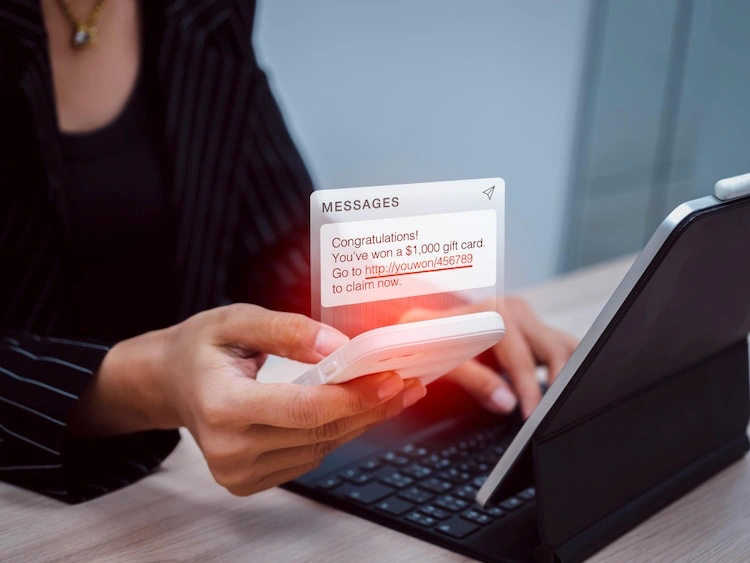
- Prize or Lottery Scams: You receive an email claiming you’ve won a lottery or prize, but to claim it, you must deposit a check and send a portion of the funds back to cover fees or taxes.
- Refund Scams: A scammer may pretend to be a legitimate company issuing a refund and send you a fraudulent check as part of the process.
4. The Role of Banks in eCheck Fraud
Banks play a critical role in detecting and preventing check fraud for your business. However, their systems aren’t foolproof:
- Temporary Fund Availability: Banks may release funds from deposited checks before the check fully clears, often within one or two business days. However, the actual verification process can take longer, which is when fraudulent checks are identified.
- Responsibility Falls on the Account Holder: If a deposited check turns out to be fraudulent, the account holder is responsible for the amount, not the bank. This can result in significant financial losses.
According to the Federal Trade Commission (FTC), check fraud is a prevalent issue, and scams involving counterfeit checks are on the rise.
5. Legal and Financial Consequences of Check Fraud
Depositing a fraudulent check, even unknowingly, can lead to severe consequences:
- Financial Loss: You are liable for the full amount of the check, which can result in overdraft fees and a negative account balance.
- Legal Issues: Depending on the jurisdiction, depositing a fraudulent check may lead to legal scrutiny, even if you’re an innocent victim.
6. How to Protect Yourself from Fake Check Scams
Here are steps you can take to safeguard yourself:
- Verify the Source: Always confirm the legitimacy of the sender. If you receive an unexpected check, contact the supposed issuer directly using official contact information, not the details provided in the email.
- Look for Red Flags: Watch out for poor grammar, urgent language, or requests to act immediately. Scammers often use these tactics to bypass critical thinking.
- Use Secure Payment Methods: For legitimate transactions, consider using secure payment methods such as bank transfers or payment processors like PayPal that offer buyer protection.
For businesses that issue checks regularly, outsourcing check printing and mailing services provide an additional layer of protection by removing manual handling from the process entirely. - Monitor Your Bank Account: Regularly check your bank statements for unusual or unauthorized transactions.
- Enable Two-Factor Authentication (2FA): For additional security, enable 2FA on your email and banking accounts to prevent unauthorized access.

7. What to Do if You Receive a Suspicious eCheck
If you suspect an eCheck scam, take these immediate steps:
- Do Not Deposit the Check: Avoid depositing any checks from unknown or unverified sources.
- Report the Email: Forward the scam email to your email provider’s phishing or abuse team. Many providers, like Gmail and Outlook, have dedicated email addresses for this purpose.
- Notify Your Bank: If you’ve already deposited a suspicious check, inform your bank immediately to mitigate potential losses. If your business issued the check in question and suspects it was intercepted or altered in transit, read our guide on how to handle lost or stolen checks for the full response process.
- Report to Authorities: File a report with the FTC or your local law enforcement agency. You can also report the scam to the Internet Crime Complaint Center (IC3).
How Businesses Can Protect Against eCheck Fraud Systematically
Individual vigilance — verifying senders, looking for red flags, not depositing suspicious checks — is the right advice for a person receiving one payment. But businesses processing dozens or hundreds of payments per month can’t rely on case-by-case judgment calls. You need controls that work at scale.
ACH verification and bank account validation should be standard practice before processing any new vendor or payee. Verifying that the account number and routing number actually belong to the entity you’re paying prevents a significant share of fraud before it starts.
Positive Pay is the most effective tool for businesses that both issue and receive checks. It automatically cross-references every check presented for payment against your issued check file, flagging anything that doesn’t match on amount, payee, or check number. A fraudulent eCheck that would slip past a manual review gets caught automatically.
Outsourcing check issuance eliminates the inbound fraud vector entirely for the checks your business sends. When a check printing and mailing service handles production and delivery in a SOC 1 Type 2-certified environment, there’s no check stock to intercept, no manual handoffs, and a full audit trail on every item mailed. The checks your vendors and employees receive are harder to tamper with and easier to verify as legitimate.
For finance teams looking to reduce fraud exposure without adding headcount, these three controls — ACH validation, Positive Pay, and outsourced check issuance — address the problem at the system level rather than the transaction level.
Stay Vigilant and Informed
While email is a powerful communication tool, it’s not the safest method for handling financial transactions. Scammers continue to evolve their tactics, making it more important than ever to stay vigilant. By understanding the risks associated with eChecks and taking proactive measures to verify and secure your financial activities, you can protect yourself from potential scams.
Want a secure way to handle payments? SmartPayables offers secure, automated check printing and mailing services, ensuring your financial transactions are safe and hassle-free. Contact SmartPayables today to learn more.
FAQs for e Check Scams
Can someone scam you just by sending you an eCheck?
Yes. The most common scenario is an overpayment scam: someone sends you a check for more than the agreed amount and asks you to return the difference. The check appears to clear, you send the refund, and then the original check bounces. You lose the refund amount and your bank holds you responsible. Never return funds from a deposited check until it has fully verified, which can take up to two weeks, not just the 1–2 days until funds are “available.”
How do I know if an eCheck is legitimate?
Call the issuing bank directly using a phone number from their official website (that you searched for separately, not from the echeck info). Don’t assume any contact information included in the email or on the check itself is correct.
Once you have verified you are talking to the real/legitimate business, give them the check number, amount, and issuer name and ask them to confirm it’s valid. If the check came unsolicited or involves an overpayment of any kind, treat it as fraudulent until proven otherwise.
What happens if I accidentally deposit a fake eCheck?
Contact your bank immediately and explain the situation. Ask them to flag the deposit and delay any fund availability if possible. File a report with the FTC at reportfraud.ftc.gov and your local law enforcement. The faster you act, the better your chances of limiting liability, but be aware that banks are generally not required to cover losses from fraudulent deposits.
Are eChecks safe for businesses to accept?
eChecks from established, verified business relationships are generally safe. The risk rises drastically with payments from new or unverified sources, unexpected amounts, or any situation where someone is asking you to send money back after depositing. Businesses with high payment volume should implement ACH account verification and Positive Pay controls rather than relying on manual review.
How do businesses stop eCheck fraud at scale?
The most effective combination is: ACH bank account verification before processing new payees, Positive Pay to automatically flag checks that don’t match your issued check file, and outsourced check printing and mailing to remove in-house check stock and manual handling from the equation. These controls help address fraud at the system level, rather than relying employees being able to spot individual suspicious transactions.

Founded in 2005, Smart Payables offers a full range of accounts payable payment solutions including outsourced check printing and mailing, document and statement printing and mailing, ACH direct deposits + more. Our highly experienced software developers and intelligent printing teams specialize in secure, enterprise-grade payment options that are HIPAA, SOC 1 Type 2, and ISO compliant. Our mission is to help businesses and large organizations implement secure, innovative technology that will reduce overhead and improve business operations and capabilities.